MonuMoney.in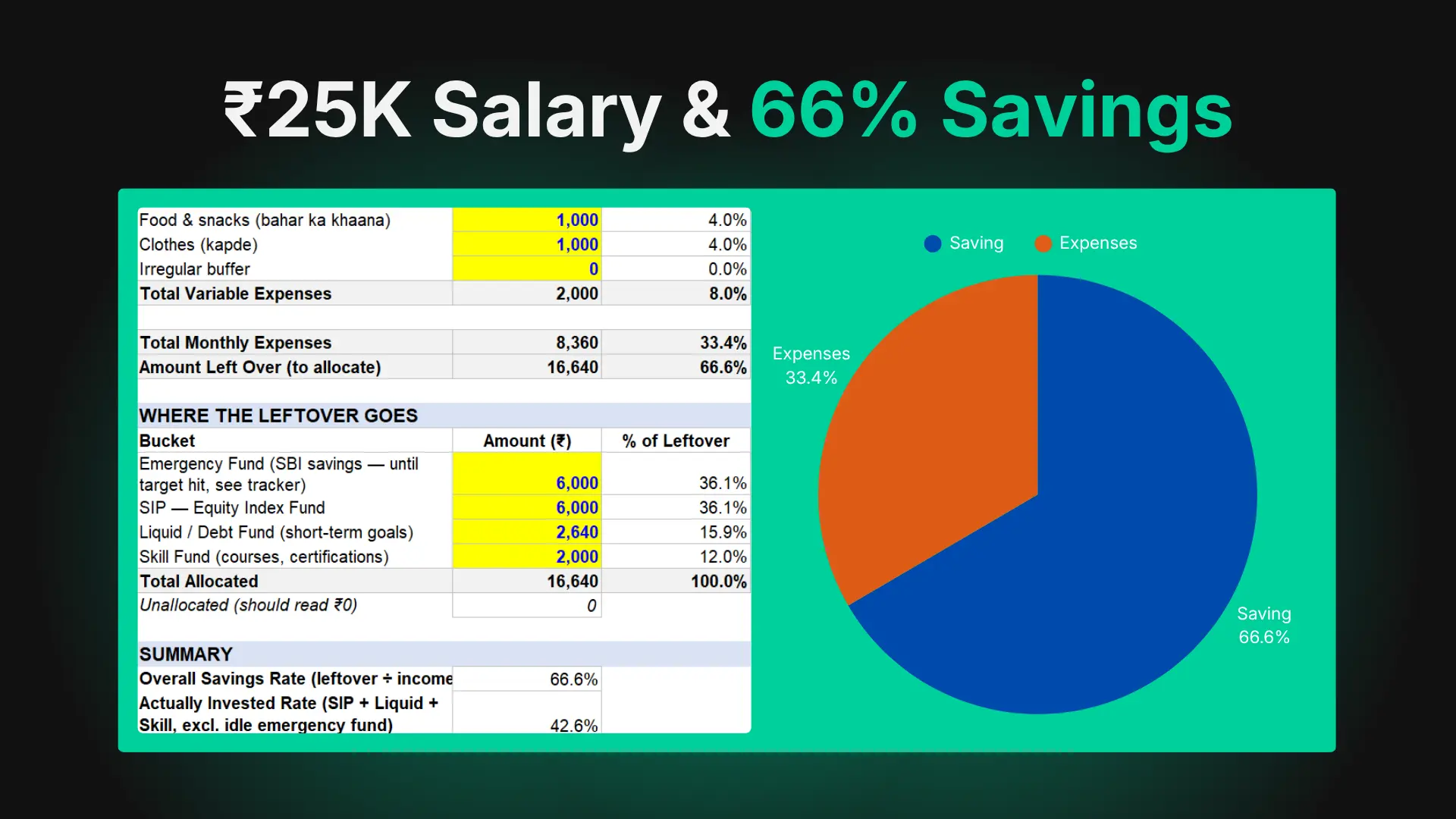
My ₹25,000 Salary Budget — I Saved 66% Of It And Still Got It Wrong (India 2026)
₹25,000 take-home, ₹8,360 expenses, 66% savings rate. Sounds perfect. Except ₹14,640 a month was piling up in a savings account at 2.5% while inflation ran at 6%. Here's the honest breakdown.
On my first salary of ₹25,000 a month, I saved 66% of it.
That number is higher than the 55% I manage today on ₹35,000. On paper it looks like I peaked at 21 and have been declining ever since. If I posted that number on LinkedIn with a sunset photo, it would do numbers.
Here's what the number hides: almost all of that "saving" was ₹14,640 a month piling up in my SBI savings account, earning 2.50% a year while inflation ran at 6%. It wasn't invested. It wasn't even in a fixed deposit. It just sat there, quietly losing purchasing power, for months longer than it should have.
So this post is two things. It's my actual ₹25,000 budget — real numbers, no cleanup — and it's an argument that savings rate is a vanity metric. What matters is where the money goes after it leaves your salary account.
If you're a fresher earning ₹20,000-30,000 and living at home, there's a good chance you're making the exact mistake I made, and feeling great about it.
Where This Post Sits In My Timeline
Quick context, because I've written about the periods on either side of this one:
Before: Same ₹25,000, but I was carrying ₹15,000 of credit card debt. I cleared it with the snowball method — full month-by-month tracker in the debt payoff post.
This post: Debt gone. Salary still ₹25,000. Money finally piling up, and me having no idea what to do with it beyond "keep it safe."
After: Salary hit ₹35,000, I built a proper tracking system, and my wealth allocation got smarter even though my savings rate went down. That's the ₹35,000 budget sheet post.
My Actual ₹25,000 Breakdown
Fixed Expenses
| Category | Amount (₹) | Honest Note |
|---|---|---|
| Home contribution (to Mom) | 5,000 | Half of what I give now. It was what I could manage then. |
| Petrol / commute | 1,000 | Bike, daily office up-down in Panipat. |
| Phone recharge (Jio) | 360 | One plan. Nothing else. |
| Electricity share | 0 | My brother paid it. I contributed nothing. |
| Total Fixed | 6,360 | 25.4% of income |
That ₹0 electricity line deserves a flag. I wasn't paying it — my brother was. If someone else subsidises part of your living cost, your savings rate is flattering you. My real cost of living was higher than ₹6,360. I just wasn't the one paying the difference.
Variable Expenses
| Category | Amount (₹) | Honest Note |
|---|---|---|
| Bahar ka khaana, snacks | 1,000 | About ₹250 a week. Mom cooked everything else. |
| Kapde | 1,000 | Averaged. Some months ₹0, some months ₹2,500. |
| Irregular buffer | 0 | I had no buffer line. Chaos came out of savings instead. |
| Total Variable | 2,000 | 8% of income |
Where The Money Went
| Bucket | Amount (₹) | Where it actually sat |
|---|---|---|
| SIP (mutual funds on Groww) | 2,000 | Equity. Auto-debit. Details in my portfolio post. |
| SBI savings account | 14,640 | Everything left over. 2.50% p.a. |
| Total "saved" | 16,640 | 66.6% of income |
The Summary
| Line | Amount (₹) |
|---|---|
| Take-home | 25,000 |
| Total expenses | 8,360 (33.4%) |
| Into equity (SIP) | 2,000 (8%) |
| Into SBI savings | 14,640 (58.6%) |
| Savings rate | 66.6% |
66.6%. And only 8% of my income was actually invested in anything that grows.
The Real Mistake: A Savings Account Is Not A Plan
My monthly survival cost was ₹8,360. A standard six-month emergency fund is ₹50,160.
At ₹14,640 a month going into SBI, I hit that in 3.4 months.
Everything after that was just accumulation with no destination:
| Time on the job | SBI balance | Above what I needed |
|---|---|---|
| 6 months | ₹87,840 | ₹37,680 |
| 12 months | ₹1,75,680 | ₹1,25,520 |
| 18 months | ₹2,63,520 | ₹2,13,360 |
| 24 months | ₹3,51,360 | ₹3,01,200 |
After a year, ₹1.25 lakh was sitting in a savings account with no job to do.
What that costs, using SBI's current 2.50% savings rate:
| Where ₹1,25,520 sits for one year | Returns |
|---|---|
| SBI savings account (2.50%) | ₹3,138 |
| Liquid fund (~6.5%) | ₹8,159 |
| Difference | ₹5,021 |
And the part that actually matters — real return. Savings at 2.50% against 6% inflation is −3.5% a year. That ₹1.25 lakh lost about ₹4,393 of purchasing power in twelve months. The number in the app went up. What it could buy went down.
Stretch it out and the gap stops being a rounding error. Same ₹14,640 a month, three destinations:
| Duration | SBI savings (2.5%) | Liquid fund (~6.5%) | Equity (12% long-run) |
|---|---|---|---|
| 3 years | ₹5.48 lakh | ₹5.83 lakh | ₹6.37 lakh |
| 5 years | ₹9.37 lakh | ₹10.40 lakh | ₹12.08 lakh |
| 10 years | ₹19.98 lakh | ₹24.79 lakh | ₹34.01 lakh |
| 20 years | ₹45.62 lakh | ₹72.19 lakh | ₹1.46 crore |
Same discipline. Same money leaving my account on the same day. A ₹1 crore difference over twenty years, decided entirely by which account it landed in.
To be clear about the 12% figure: that's a long-run equity assumption for illustration, not a promise. Markets fall — I wrote about sitting through a 10% correction here. But that's an argument for a long horizon, not for parking everything at 2.5%.
Why I Did It (And Why You Probably Are Too)
I want to be fair to 21-year-old me, because the reasons weren't stupid:
I'd just come out of debt. After clearing ₹15,000 of credit card debt, a growing bank balance felt like safety. Watching that number rise was the reward for a year of grinding. I wasn't going to risk it.
Nobody told me a savings account loses money. I knew about inflation as a concept. I did not connect it to my own balance. "Savings account" has the word savings in it. It sounds like the responsible choice.
I didn't know what "invested" meant beyond SIP. I'd started a ₹2,000 SIP and considered that box ticked. Liquid funds, debt funds, sweep-in FDs — I didn't know these existed as a middle ground between "savings account" and "stock market."
Nothing forced a decision. The SIP was automated, so it happened. The leftover had no instruction attached, so it defaulted to staying put. Money without a destination always defaults to the lowest-return option available.
That last one is the real lesson. It's not that I chose a savings account over a liquid fund. I never made a choice at all.
What My ₹25,000 Budget Should Have Looked Like
Same income. Same expenses. Same ₹16,640 available. Only the destinations change.
| Bucket | Amount (₹) | Where | Why |
|---|---|---|---|
| Emergency fund | 6,000 | SBI savings | Only until ₹50,160. Then this line dies. |
| SIP (equity) | 6,000 | Index fund, auto-debit | The actual wealth engine. |
| Liquid / debt fund | 2,640 | Liquid fund | Short-term goals. ~6.5% instead of 2.5%, still accessible in a day. |
| Skill fund | 2,000 | Separate account | At ₹25K, this has the highest return of anything here. |
| Total | 16,640 | Same 66.6%, doing actual work |
Three things worth defending:
The emergency fund line expires. This is the bit I got wrong. An emergency fund is a target, not a habit. Once you hit ₹50,160, that ₹6,000 doesn't keep going to savings — it moves to SIP permanently. Set the target, hit it, redirect. Work out your own number on the emergency fund calculator.
A liquid fund is not the stock market. This is the gap I didn't know existed. Money you might need in 1-3 years — a laptop, a course, a trip — shouldn't be in equity, but it also shouldn't be at 2.5%. Liquid funds give roughly 6-6.5%, redeem in a day, and carry very little risk. Perfect middle ground.
₹2,000 for skills beats ₹2,000 more of SIP. At ₹25,000 a month, the highest-return investment available to you is whatever moves you to ₹35,000. A certification that gets you a ₹10,000 raise returns more in one year than a decade of optimising your grocery spend. I ran a side-hustle experiment around this period too — honest results, including the flops, here.
If You Pay Rent, This Post Doesn't Apply To You
My 66% savings rate exists because I lived at home, my mother cooked every meal, and my brother paid the electricity bill. That's not a financial strategy. That's a family.
Honest adjustment:
| Line | Home (Panipat) | Rent ₹8,000 (tier-2) | Rent ₹12,000 (metro PG) |
|---|---|---|---|
| Housing | 5,000 | 8,000 | 12,000 |
| Food | 1,000 | 4,500 | 6,000 |
| Commute | 1,000 | 1,500 | 2,000 |
| Phone + utilities | 360 | 1,200 | 1,200 |
| Clothes + personal | 1,000 | 1,500 | 2,000 |
| Total expenses | 8,360 | 16,700 | 23,200 |
| Left over | 16,640 (67%) | 8,300 (33%) | 1,800 (7%) |
That last column is not a budgeting failure. ₹25,000 in a metro with ₹12,000 rent is a survival income, not an investing income. If that's you, don't burn six months trying to optimise a ₹1,800 surplus — spend those months on the income side and revisit the budget at ₹35,000.
I'd rather say that plainly than sell you a spreadsheet that pretends the maths works.
What Actually Changed at ₹35,000
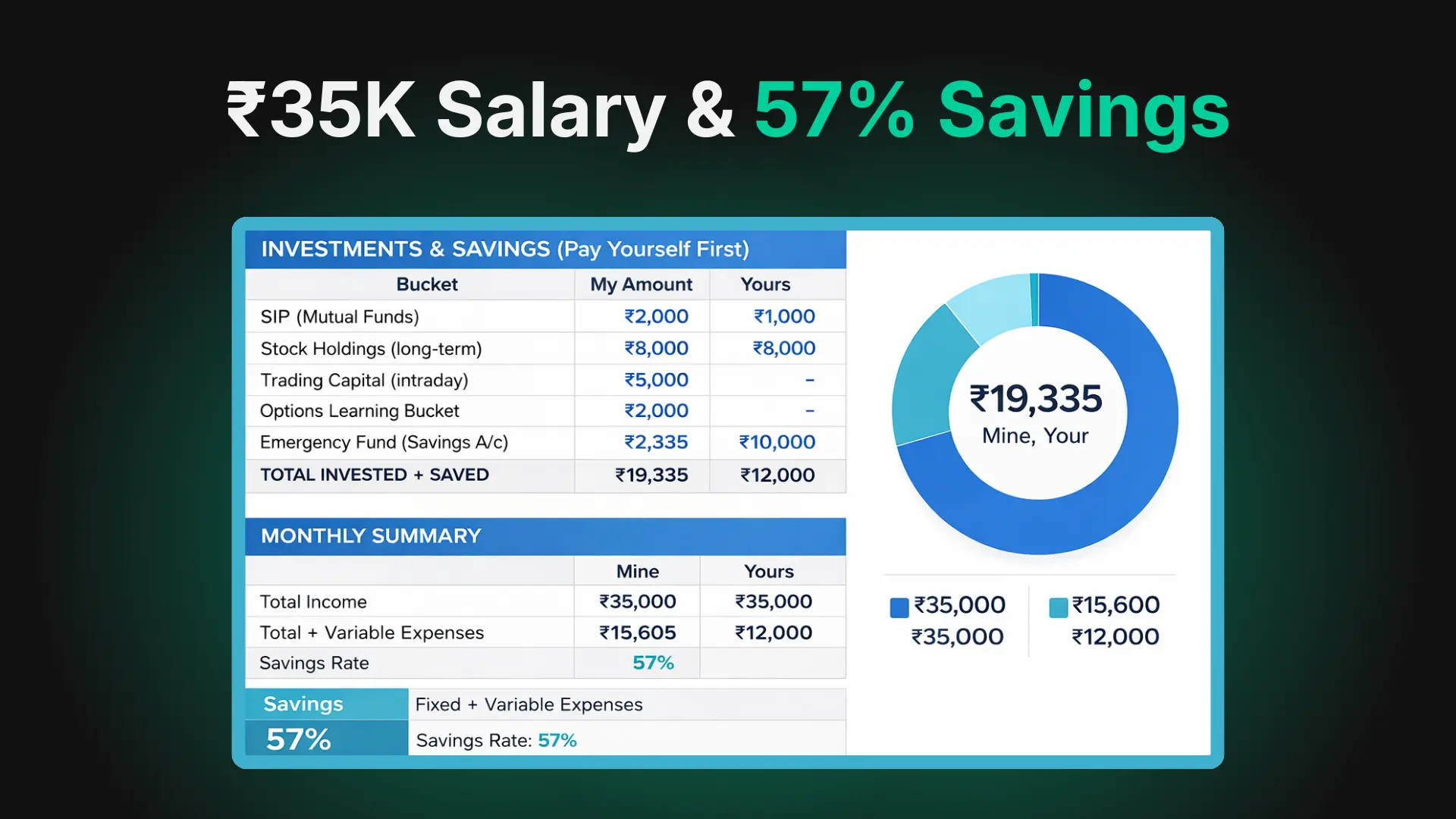
The interesting part: my savings rate went down when my salary went up. And my finances got better.
| ₹25,000 | ₹35,000 | |
|---|---|---|
| Total expenses | ₹8,360 | ₹15,665 |
| Savings rate | 66.6% | 55.2% |
| Into equity/growth | ₹2,000 | ₹17,000 (SIP + stocks + trading) |
| Sitting in savings | ₹14,640 | ₹2,335 (emergency fund top-up only) |
| Untracked | ₹0 | ₹0 |
At ₹25,000 I saved more of my income and invested almost none of it. At ₹35,000 I saved a smaller share and put nearly all of it to work. The second one is better, and it's not close.
Savings rate is a vanity metric. Deployment is the real one. A 40% savings rate that's fully invested beats a 66% rate rotting in a savings account, every single time.
The full system I use now is in the ₹35,000 budget sheet post. The ₹25,000 version of the sheet is below.
Quick Note On Your Tax at ₹25,000
₹25,000 a month is ₹3 lakh a year. Under the new tax regime, salaried income up to ₹12.75 lakh has zero tax liability. At ₹3 lakh, you owe nothing.
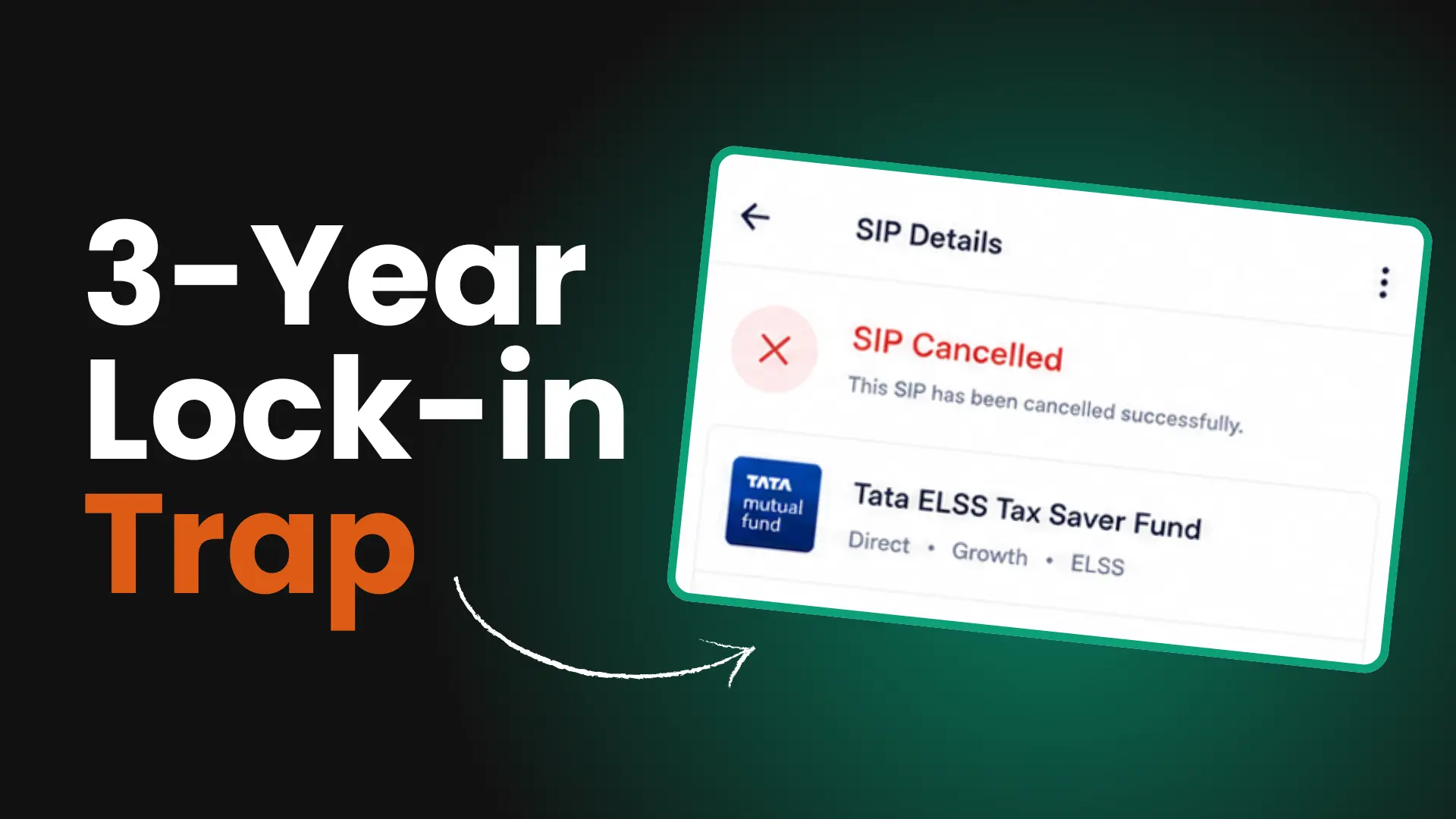
Which means every "tax-saving investment" being pitched at you right now — ELSS, tax-saver FDs, insurance-linked plans — is solving a problem you don't have. Don't lock money into a 3-5 year product for a deduction worth ₹0. Invest for returns and liquidity instead.
Full regime comparison here, and you can check your own liability on the tax calculator.
Download the Sheet
Everything I've described above is in a single Excel file. Zero login, zero email gate (for now), zero ads in the file. Click below to download. Open it. Edit the Yellow cells. Watch the numbers update.
👉 Download 25000_salary_budget_planner_india_2026.xlsx
The Short Version
If you're a fresher on ₹20,000-30,000 living at home, this is what I'd tell 21-year-old me:
- Give every rupee a destination, not just a direction. "Save it" is not a plan. "₹6,000 to emergency fund until ₹50,160, then to index fund" is a plan.
- Your emergency fund has a finish line. Hit six months of expenses, then redirect that entire amount to investing. Don't let it accumulate forever because it feels safe.
- Learn that liquid funds exist. The gap between "savings account" and "stock market" is where most of your short-term money should live.
- A savings account is a −3.5% real return. 2.50% against 6% inflation. That's not safety, it's a slow leak.
- Automate the boring parts. My SIP never failed because it was auto-debited. Everything manual eventually loses to a Tuesday evening.
- At ₹25,000, spend on income. Skills beat spreadsheets at this salary. Every time.
I saved two-thirds of my first salary and I'm still slightly annoyed about it, because most of it spent a year doing nothing. If your bank balance is growing and that feels like winning — check what rate it's growing at, and compare it to inflation.
Saving is the easy half. Deciding where it goes is the half that actually pays.
This is not financial advice. I am not a CA or a SEBI-registered advisor. I'm a B.Tech CSE student and digital marketer in Panipat sharing my actual numbers. The 12% equity figure is a long-run illustration, not a guarantee — real returns vary and can be negative over shorter periods. SBI's savings rate of 2.50% p.a. and liquid fund returns of ~6-6.5% are current as of July 2026 and subject to change; check current rates before acting. Your city, dependents, and income will change every number here.
Questions or corrections? Find me on X or LinkedIn, or email contact@monumoney.in.