MonuMoney.in
Debt Payoff for Beginners in India: Snowball Method That Actually Worked for Me
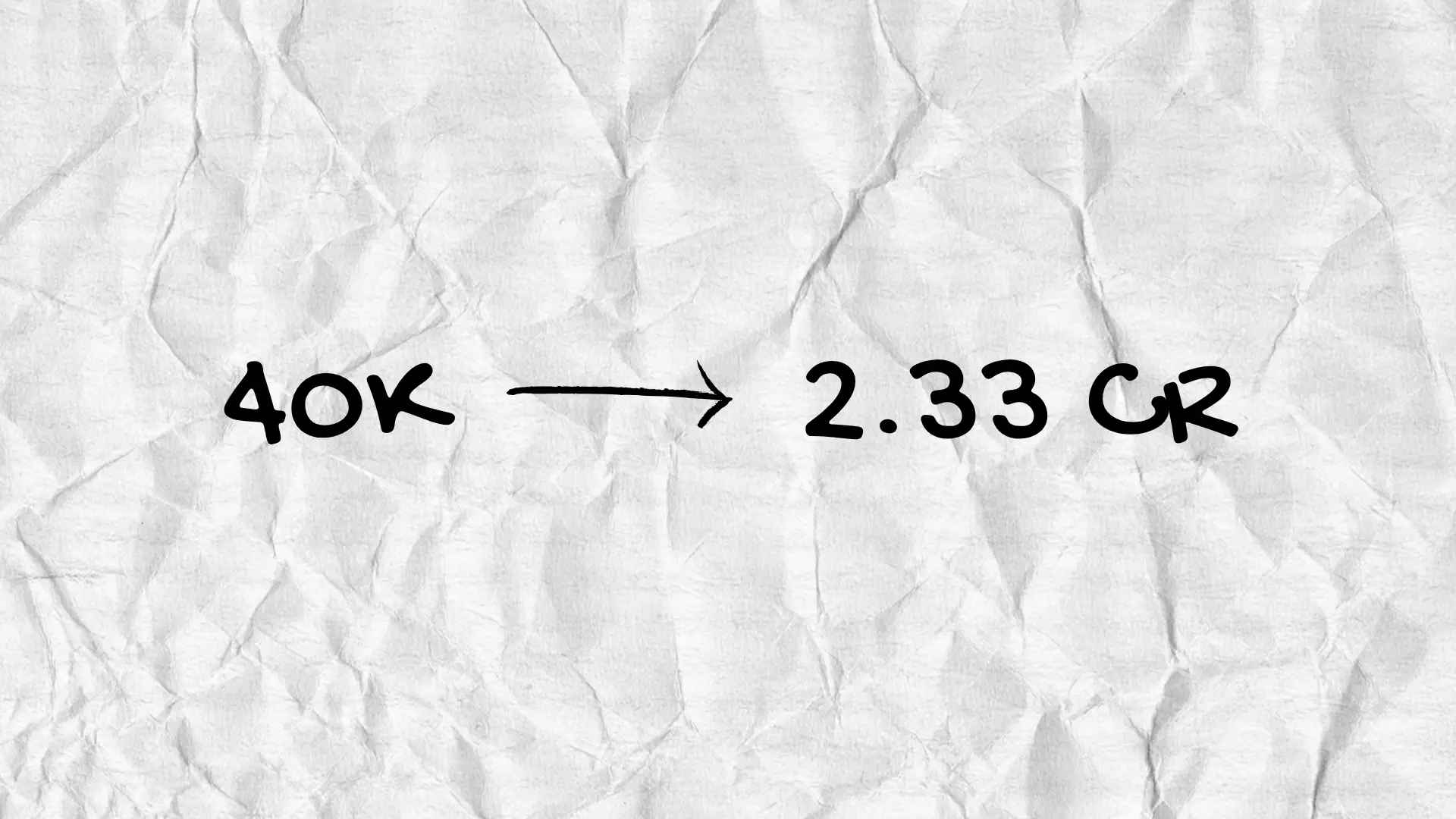
I used the snowball method to clear ₹15,000 debt on a ₹25,000 salary. Real month-by-month tracker, exact numbers, and the one psychological trick that made it work. Free debt payoff calculator included.
In December 2025, I sat down one evening and added up everything I owed. A credit card balance that had been quietly growing for months. An Amazon Pay Later purchase I'd been ignoring notifications about.
The total came to ₹15,000.
I know that number isn't massive by some standards. I've read stories online of people clearing ₹10 lakh or more. But on a ₹25,000 monthly starting salary as a digital marketing executive in Panipat, Haryana, that ₹15,000 felt heavier than it should have. Every month I paid the minimums. Every month the total barely moved. Some months it actually went up because of credit card interest.
That was 3 months ago. I recently got promoted to Digital Marketing Team Lead with a salary bump to ₹35,000, and I used that momentum to completely destroy every rupee of that debt. Two debts. Both cleared. ₹15,000 gone in just 2 months.
The method I used is called the debt snowball. And I want to show you exactly how it worked with my real numbers, my real salary, and my real mistakes.
TL;DR: I had ₹15,000 in debt across two sources. Instead of attacking the highest interest debt first (avalanche method), I started with the smallest balance first (snowball method). Clearing that first ₹3,500 Amazon Pay Later balance in a single month gave me the motivation to keep going. Research from Harvard Business Review confirms that people who pay smallest debts first are more likely to become completely debt free.
How I Ended Up in ₹15,000 Debt
It wasn't one big purchase. It wasn't one terrible decision. It was two specific patterns of stupid behaviour stacked on top of each other over a few months.
Mistake 1: Trying to impress someone.

I was dating a girl. And instead of being honest about the fact that I was a 22-year-old making ₹25,000 a month in Panipat, I tried to act like I had money I didn't have.
Every weekend we'd go to Hangries. I'd swipe the credit card for White Sauce Pasta, loaded fries, and Hazelnut Frappes without looking at the bill. Each visit was ₹800 to ₹1,200. Every single time I told myself "it's fine, I'll adjust next month." I never adjusted.
But the purchase that still stings to remember is the ₹4,500 Fossil watch I bought her on credit card EMI. I spent two days researching which watch would impress her the most. I placed the order on a Tuesday. We broke up the following Saturday.
That watch is still on someone else's wrist. The EMI charges were on mine for months.
Between the dinners, the outings, and that watch, my credit card balance climbed to ₹11,500 without me ever making a single "big" purchase. It was death by a hundred swipes.
Mistake 2: Tech lifestyle creep.
I'm a tech guy. I'm into vibe coding, building side projects in Next.js, messing around with AI tools. Somewhere along the way I convinced myself that I wasn't a real developer unless I had a proper external monitor setup.
So I bought a 19-inch monitor on Amazon Pay Later for ₹3,500. Did I need it? I'd been coding on my laptop screen for two years without any problems. But I'd seen setups on Twitter and YouTube and decided my productivity was "suffering" without a second screen. It wasn't.
On top of that, I had recurring Google Cloud hosting fees for my Next.js projects that kept quietly draining money every month. Small amounts. ₹200 here, ₹350 there. But on a ₹25,000 salary, everything adds up.
Here's what my debt looked like on paper:
| Debt | Amount | Interest Rate | Monthly Minimum |
|---|---|---|---|
| Amazon Pay Later | ₹3,500 | ~15% | ~₹500 |
| Credit card | ₹11,500 | 18% annual | ~₹1,000 |
| Total | ₹15,000 | ~₹1,500 |
For months I just kept paying the minimums and hoping the problem would somehow fix itself. Spoiler: it didn't.
What Is the Debt Snowball Method and How Does It Actually Work?
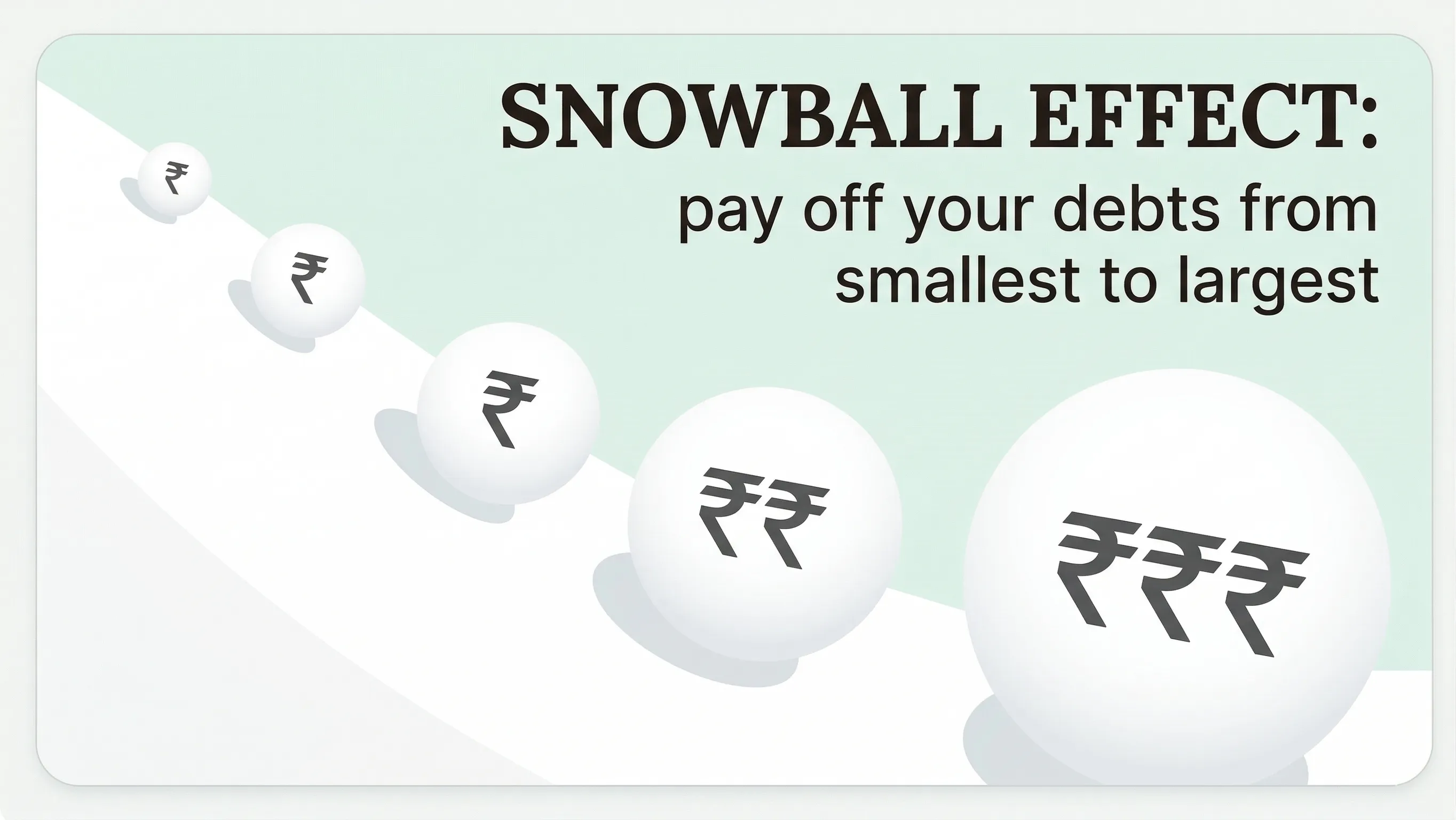
The debt snowball is a payoff strategy where you list all your debts from smallest balance to largest balance, ignoring interest rates completely. You make minimum payments on everything except the smallest debt. Every extra rupee you have goes to that smallest one. When it's gone, you take everything you were paying on it and roll it into the next smallest debt.
The "snowball" grows bigger with each debt you eliminate because you're stacking freed-up payments on top of each other.
There's another popular method called the debt avalanche. In avalanche, you attack the highest interest rate first regardless of balance size. Mathematically, avalanche saves you more money in total interest paid.
Every finance website in India will tell you avalanche is the "smart" choice. And they're right about the math. But they're completely wrong about human psychology.
Why Did I Choose Snowball Over Avalanche?
A study published in Harvard Business Review by researchers from Boston University and Emory University found that consumers who focused on paying off small balances first were significantly more likely to eliminate their total debt. The researchers concluded that the psychological boost from completely eliminating individual debts provides motivation that pure mathematical optimization simply cannot match.
I read about both methods in January 2026 when I started taking personal finance seriously. On paper, the "correct" move was to attack my credit card first. It had the highest interest at 18% and the larger balance of ₹11,500. But that would mean grinding for 2 to 3 months before I could cross even one debt off my list.
My Amazon Pay Later balance was ₹3,500. Every personal finance expert ranking by interest rates would tell you "pay the credit card first, it costs more." Logically that makes perfect sense.
I paid the Amazon balance first anyway.
Why? Because I knew myself. I knew that if I didn't see a real, concrete win within the first month, I'd quietly give up. I'd go back to paying minimums and pretending the debt wasn't there. I'd done exactly that before. I needed to see one debt completely disappear from my list to believe the rest was possible.
That decision changed everything for me.
My Exact Snowball Plan With Real Numbers
Let me show you the exact setup I started with in January 2026.
My monthly take-home salary: ₹25,000
My essential expenses every month: ₹18,000 (rent, food, transport, phone, utilities)
Minimum debt payments: ₹1,500
Money left after everything: ₹25,000 minus ₹18,000 minus ₹1,500 = ₹5,500
That ₹5,500 was my snowball weapon. The entire amount went to the smallest debt first. Not split across debts. Not "a little here, a little there." All of it aimed at one target until that target was dead.
Snowball order:
- Amazon Pay Later: ₹3,500 (smallest)
- Credit card: ₹11,500 (largest)
Month by Month: How My Snowball Actually Rolled
Month 1 (January 2026)
Target: Amazon Pay Later (₹3,500)
Snowball payment: ₹3,500 to Amazon Pay Later. Done. Cleared. Finished. One shot.
Remaining snowball that month: ₹5,500 minus ₹3,500 = ₹2,000. Every rupee of it went straight to the credit card.
I cannot overstate the dopamine hit of watching that Amazon Pay Later balance go to ₹0.00 and the account close out. It sounds ridiculous that clearing ₹3,500 could feel like a life event. But when you've spent months watching debt balances sit there like permanent fixtures in your financial life, seeing one actually disappear does something to your brain. Two debts became one. The list got shorter. Progress became visible for the first time.
Credit card remaining after Month 1: approximately ₹9,500.
Other debt: Paid minimum on credit card as part of my ₹1,500 budget. Didn't touch it beyond that plus the ₹2,000 overflow.
Month 2 (February 2026)
Target: Credit card (~₹9,500 remaining)
And then the plot twist happened.
I got promoted to Digital Marketing Team Lead. My salary jumped from ₹25,000 to ₹35,000 per month. A ₹10,000 raise.
Here's what I did with that raise: absolutely nothing visible. I didn't upgrade my lifestyle. I didn't celebrate with a dinner out. I didn't "treat myself." I kept my expenses at exactly ₹18,000, the same number I'd been living on for months. No lifestyle inflation. Not a single rupee.
New math: ₹35,000 minus ₹18,000 minus ₹1,500 = ₹15,500 in leftover cash.
I opened my banking app on salary day. I looked at the credit card balance: ₹9,500. I transferred the full amount in a single payment. Same day. Didn't give myself time to think about it, negotiate with myself, or find reasons to "wait until next week."
₹9,500. Paid. Credit card balance: ₹0.00.
Two months. Two debts. Both gone. ₹15,000 cleared.
I sat on my bed staring at my phone screen showing zero balances across everything and genuinely didn't know what to do with myself. For months those numbers had been a constant background weight. And now there was just... nothing. No debt. No minimums. No guilt.
Done.
What About the Interest I "Lost" by Not Using Avalanche?
I calculated this using my own debt payoff calculator. The total extra interest I paid by choosing snowball over avalanche came to roughly ₹50 to ₹80 across the entire two-month payoff period.
Less than the cost of one Hazelnut Frappe at Hangries.
With a total debt of only ₹15,000 paid off over two months, the interest difference between snowball and avalanche is so small it's basically a rounding error. But the principle still matters, especially for people reading this with larger debts: the best debt payoff strategy isn't the one that saves the most interest on a spreadsheet. It's the one you actually stick with until the end.
If I'd tried to grind away at the ₹11,500 credit card first and watched the Amazon Pay Later balance just sitting there untouched month after month, I know exactly what would have happened. I'd have lost steam. I'd have ordered something on Zomato and told myself "I'll get back on track next month." The snowball kept me locked in.
The Psychological Wins Nobody in India Talks About
This is the part that surprised me the most. And this is the part that every "snowball vs avalanche" comparison article completely ignores.
I stopped being afraid of my bank balance. Before the snowball, I dreaded opening my banking app. I'd check it maybe once a week, usually the day before salary. Now I check it almost every day. Not from anxiety. From curiosity. I genuinely want to see the numbers moving in the right direction.
Saying no became easy. When friends planned an expensive outing, I'd suggest a cheaper option without feeling embarrassed about it. Before starting this journey, I would have gone along and silently put it on the credit card. Now I had a reason to say no that actually felt good: "I'm paying off my debt and it's working."
I got curious about money for the first time in my life. The snowball method was my entry point into personal finance. Once I saw that a simple strategy could make ₹15,000 feel manageable and then make it disappear entirely, I started wondering what else I didn't know about money. That curiosity is what led me to start MonuMoney.in and build free financial calculators for other people in the same situation.
3 Mistakes I Made That You Should Avoid
1. I kept using my credit card while trying to pay it off.
For the first couple of weeks after I started the snowball, I was still ordering ₹300 Zomato meals and telling myself "it won't matter." Every ₹300 swipe was adding to the exact balance I was trying to reduce. I was filling a bucket with a hole in the bottom. The day I removed my credit card from Zomato, from Swiggy, from Amazon, from every app and online store, was the day my debt actually started going down consistently. If you're paying off a credit card, stop using it. Not "use it less." Stop.
2. I tried to do it silently.
For the first few weeks I didn't tell anyone what I was doing. I thought talking about debt was shameful. Especially debt from trying to impress an ex-girlfriend. Then I told my close friend Sandeep about the whole plan.
His exact reaction: "Bhai, tu pagal hai kya? 25k ki salary mein credit card pe kon date karta hai?"
Harsh? Yes. But also exactly what I needed to hear. After that conversation, I started messaging him my updated balances every month. Knowing someone else was watching my progress made it much harder to skip a payment or cheat the plan. Find your Sandeep. Tell them the truth. Let them hold you accountable, even if their first reaction makes you want to crawl under your bed.
3. I didn't track the numbers visually.
For the first few weeks I was keeping rough numbers in my head. "I think my credit card is around 10-something thousand." That vagueness is dangerous because it lets you hide from reality. You need every debt written down with the balance, interest rate, and minimum payment visible in one place.
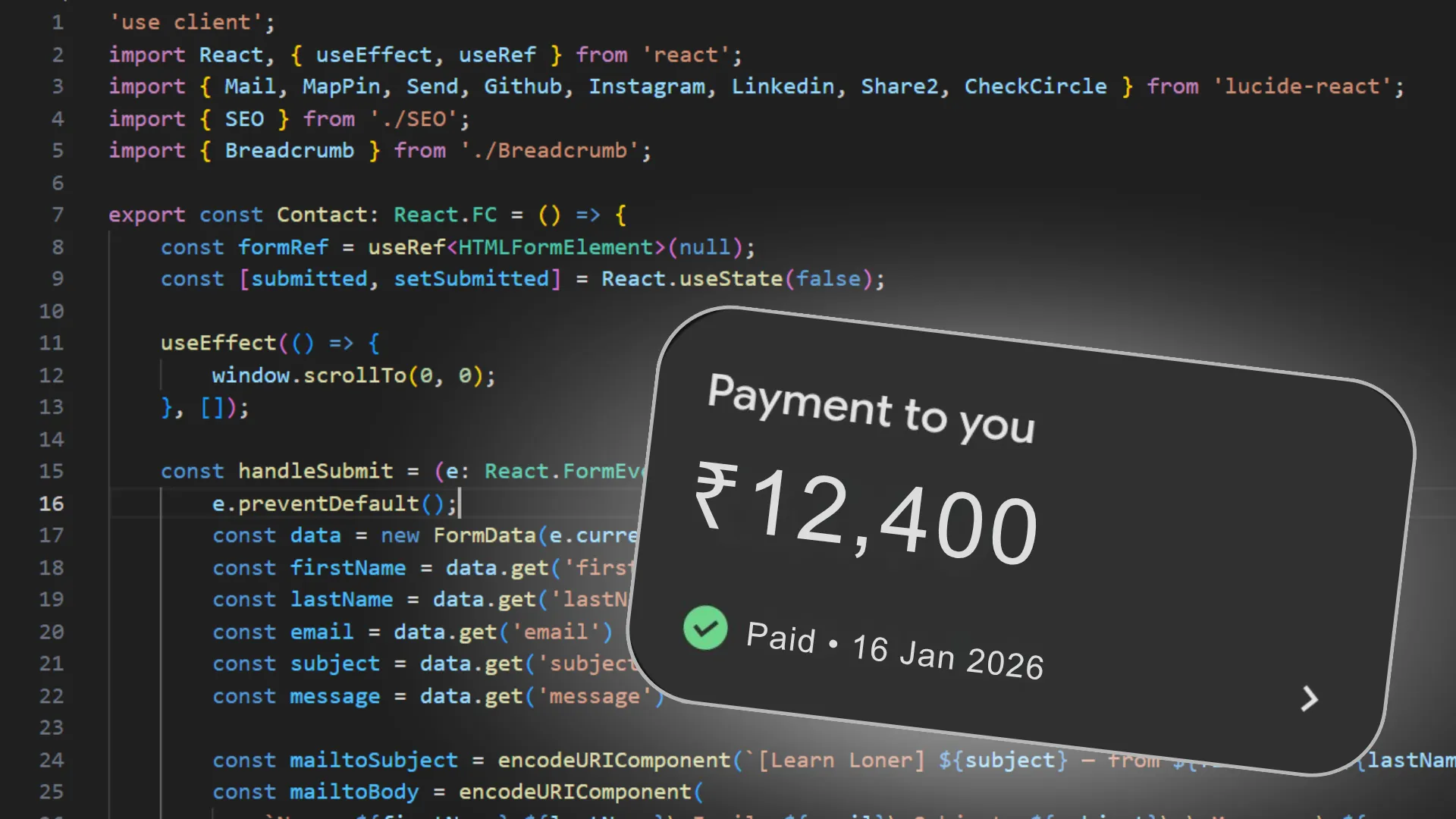
I started with a simple Google Sheet. Later, that frustration of not having a good visual tracker is exactly why I coded the free debt payoff calculator on MonuMoney.in. The tool you use doesn't matter. Seeing all your debts in one list with updating numbers is what matters. When the number goes down and you can see it, the motivation takes care of itself.
Should You Use the Snowball Method?
If you have multiple debts and you've been stuck paying minimums for months or years, yes. Especially if you've tried to get serious about debt before and quietly gave up. The snowball method isn't the mathematically optimal strategy. It's the psychologically optimal strategy for most real people.
If you only have one debt, this whole approach doesn't apply. Just pay as much extra as you can every month beyond the minimum.
If the interest rate gap between your debts is massive, like one debt at 8% and another at 36%, you might want to consider a modified approach or go with avalanche. But for most Indians dealing with a combination of credit cards, BNPL balances, and informal family borrowings, the snowball works.
Try the free debt payoff calculator with your own numbers. Enter your debts, see the snowball order, and find your projected debt free date. No login needed. No email required. Just your numbers and your answer.
Frequently Asked Questions
Does the snowball method work for large debts like home loans?
The snowball method is most effective for consumer debts like credit cards, personal loans, BNPL balances, and informal borrowings. For home loans with 15 to 20 year tenure, a combination of regular EMI payments plus occasional lump sum prepayments is usually more practical. Even one extra EMI payment per year can save lakhs in interest over the loan tenure. Use an EMI calculator to see how prepayments change your total interest and tenure.
How much extra money per month do I need for snowball to make a difference?
Even ₹3,000 to ₹5,000 extra per month creates real momentum. According to RBI data, India's household debt-to-GDP ratio crossed 40% in 2024, which means millions of Indians are carrying debt on modest salaries. The amount matters less than the consistency. I started with ₹5,500 per month and it was enough to clear ₹15,000 in two months. The key is directing every available rupee at one debt at a time instead of spreading it thin.
Won't I pay more total interest with snowball compared to avalanche?
Technically yes. In my case the difference worked out to under ₹100 over the entire payoff period because the amounts were small and the timeline was short. For larger debts the gap can be a few thousand rupees. But here's what the comparison articles never mention: a study published in the Journal of Consumer Research found that people using the snowball method were significantly more likely to actually complete their debt payoff journey. The method that you finish beats the method that saves a few thousand rupees but you abandon halfway.
What if I have an emergency while paying off debt?
Build a small emergency buffer of ₹10,000 to ₹15,000 before going aggressive on debt payoff. This isn't a full emergency fund. It's just enough to handle one unexpected expense without reaching for your credit card. Once you're debt free, you can build a proper 3 to 6 month emergency fund. Use the emergency fund calculator to figure out what your full emergency fund should eventually look like.
Can I combine snowball and avalanche?
Yes. Some people use a hybrid approach: if two debts have similar balances but very different interest rates, attack the higher interest one first. If the balances are very different, go with snowball order. The goal is to find what keeps you motivated while not completely ignoring interest costs. For most people with 2 to 4 debts, pure snowball works fine because the interest difference is usually small.
What Happens After the Last Payment?
I'm writing this in March 2026. Both debts are cleared. ₹15,000 gone. Zero balances across the board.
That ₹15,500 per month that was going toward debt and minimums is now money I can actually invest. I've already started learning about SIP investing and long-term wealth building using the SIP calculator and retirement calculator I built on this site. I started my first SIP the same month I made my final debt payment. ₹5,000 per month into a Nifty 50 index fund. It's not much. But it's money moving in the right direction for the first time in my life. Also, given recent market trends, see my analysis on the record 2026 SIP inflows vs FPI outflows.
Going from ₹15,000 in debt to investing for my future on a ₹35,000 salary. That's not really a story about money. That's a story about proving to myself that I can change a pattern that felt permanent.
If you're sitting where I was in December 2025, staring at a debt total that feels impossible to clear on your salary, I want you to know something. It's not impossible. List your debts. Start with the smallest one. Throw everything you've got at it. When it disappears from your list, you'll feel something shift inside you.
That shift is what carries you through the rest.
Try the debt payoff calculator with your own real numbers. See your own debt free date. I promise you, that date is closer than it feels right now.
Disclaimer: This blog post shares my personal experience with debt payoff and is for educational purposes only. I am not a certified financial advisor. Please consult a qualified financial professional before making important financial decisions.
Official Sources & Verification
To ensure accuracy, the formulas, rules, and tax provisions used on this page are verified against official government, regulatory, or institutional sources.
- Income Tax Department of India
- Union Budget & Finance Bill
- Reserve Bank of India (RBI)
- Securities and Exchange Board of India (SEBI)
Last Verified: March 28, 2026