MonuMoney.in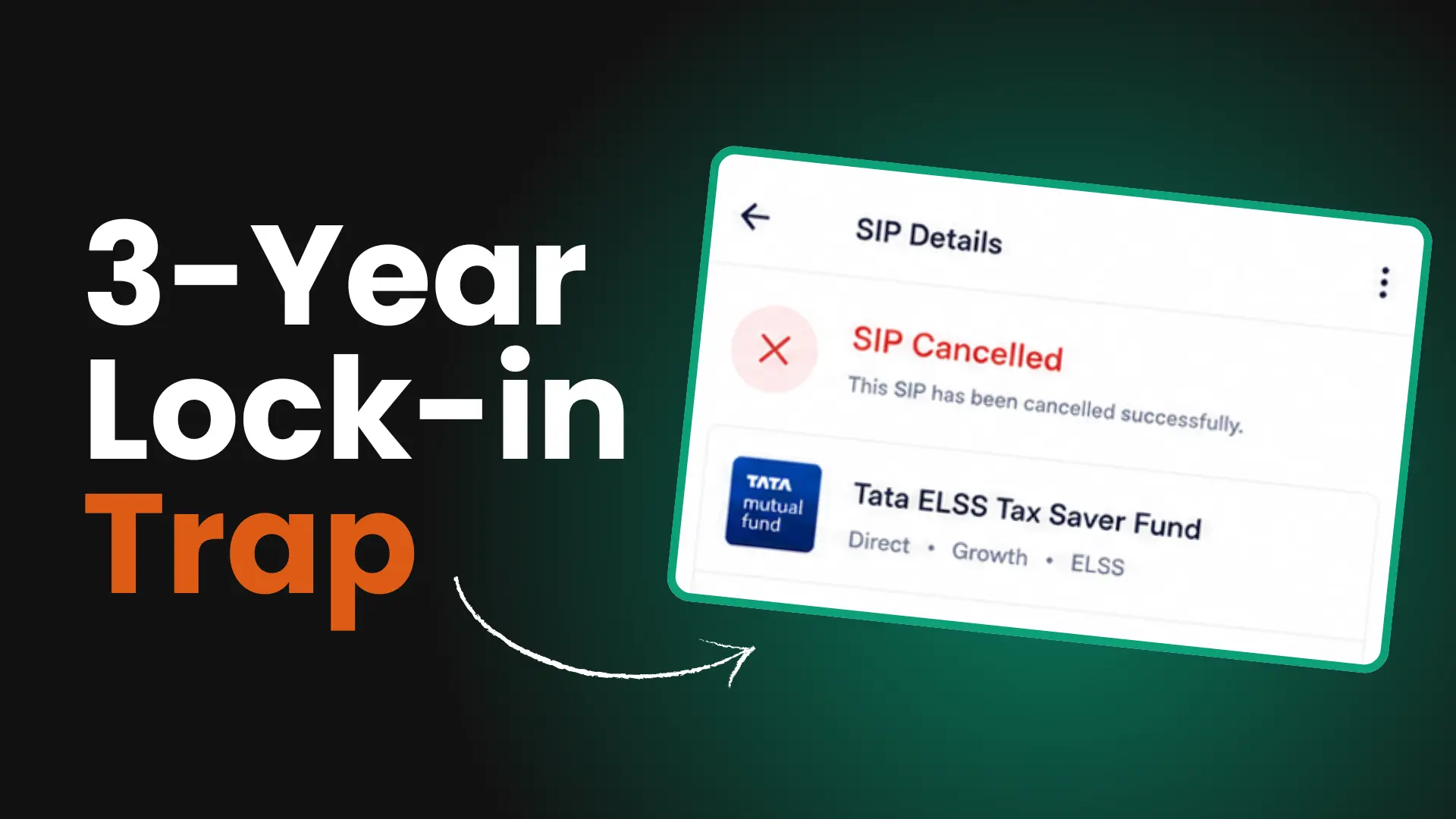
Why I Just Cancelled My ₹5,000 ELSS SIP (And You Probably Should Too)
Everyone tells you to buy ELSS mutual funds to save tax. But after running the math on the new 2026 tax slabs, I just cancelled my ₹5,000 SIP. Here is why.
When I got my first job as a digital marketing executive, my uncle gave me the standard Indian middle-class financial starter pack: "Open a PPF account, get a LIC policy, and start an ELSS SIP to save tax."
For the last 14 months, I blindly followed step three. On the 5th of every month, ₹5,000 was auto-debited from my account into a popular ELSS (Equity Linked Savings Scheme) mutual fund.
Yesterday, I logged into my brokerage app and hit the "Cancel SIP" button.
I didn't stop investing. I just stopped investing in ELSS. If you are a salaried professional earning anywhere between ₹6 Lakhs to ₹15 Lakhs, there is a 90% chance you are currently making the same mistake I was.
Here is why ELSS has quietly become a trap, and exactly where I moved my ₹5,000 instead.
The Death of the Section 80C Nudge
To understand why ELSS is suddenly a bad deal, you have to understand why it existed in the first place.
ELSS funds are just regular equity mutual funds with one special feature: the money you put in qualifies for a tax deduction under Section 80C (up to ₹1.5 Lakhs). But to stop people from withdrawing the money the next day, the government slapped a strict 3-year lock-in period on it.
For a long time, this was a great deal. You lock your money away, but you save ₹45,000 in taxes.
Then, the rules changed.
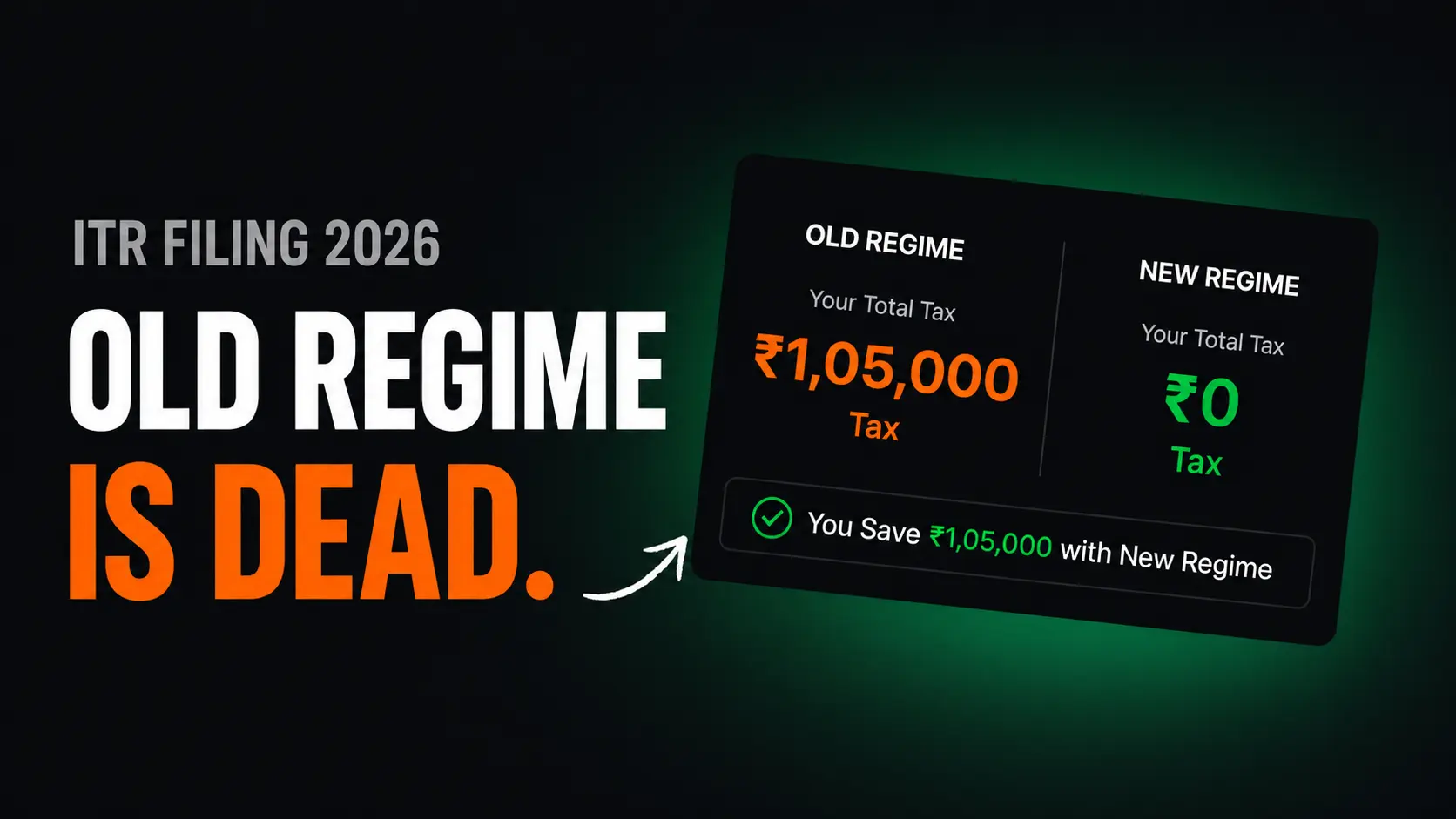
As I broke down in my recent deep-dive, ITR Filing 2026: 7 Rules That Killed The Old Tax Regime, the New Tax Regime is now the default. Under the new regime, income up to ₹12.75 Lakhs is effectively tax-free for salaried employees, thanks to the ₹60,000 Section 87A rebate and standard deduction.
Read that again. Zero tax up to ₹12.75 Lakhs.
The Math That Woke Me Up
Let’s look at my actual situation. I am 24, making roughly ₹35,000 a month from my day job, plus some freelance income from MonuMoney. My total taxable income is well under ₹12 Lakhs.
If I file my taxes under the new regime, my tax liability is ₹0.
So, I asked myself a very simple question: Why am I locking my money up for 3 years to get a tax deduction I don't even need?
Here is the brutal truth about ELSS in 2026:
- Under the new tax regime, Section 80C deductions do not exist.
- If you don't need the 80C deduction, an ELSS fund is literally just a Flexi-Cap fund that holds your money hostage for 36 months.
If a medical emergency hits tomorrow, or if I finally decide to buy a second-hand car, I cannot touch that ELSS money. Not even paying an exit load will unlock it. The 3-year lock-in is statutory.
That is not an investment strategy. That is a liquidity trap.
The Comparison: ELSS vs Flexi-Cap
Once I realized the tax benefit was useless for my income bracket, I compared my ELSS fund to a standard Flexi-Cap fund.
| Feature | ELSS (Tax Saver) Fund | Standard Flexi-Cap Fund |
|---|---|---|
| Asset Allocation | 65%+ in Equity | 65%+ in Equity |
| Tax Benefit (Old Regime) | Yes (Under 80C) | No |
| Tax Benefit (New Regime) | No | No |
| Lock-in Period | 3 Years (Strict) | None (Liquid) |
| Exit Load | None (Because you can't exit) | 1% if redeemed within 1 year |
If you want to see exactly how much a 12% vs 14% return impacts your wealth over 10 years, run your numbers through the MonuMoney SIP Calculator.
Why would I restrict my liquidity when the underlying asset (equity) and the tax treatment (zero benefit under the new regime) are exactly the same?
Where I Moved My ₹5,000 SIP
Cancelling a SIP doesn't mean stopping the habit. I immediately redirected that ₹5,000 into my existing portfolio structure.
Instead of an ELSS fund, my ₹5,000 now goes into a pure Nifty 50 Index Fund.
Here is what changes for me:
- Zero Lock-in: If I need the money next year, I can withdraw it. I’ll just pay a 12.5% Short-Term Capital Gains (STCG) tax.
- Lower Expense Ratio: My ELSS fund was charging me 0.75% annually. My Index Fund charges me 0.20%. Over 10 years, that half-percent difference compounds into thousands of rupees.
- Peace of Mind: I am no longer buying financial products based on 1990s tax advice.
(You can see my exact fund names and my complete asset allocation in my Best Mutual Funds 2026 For Beginners post).
Who Should Actually Buy ELSS in 2026?
I am not saying ELSS is a bad product. It is just a bad product for my salary bracket.
You should only start an ELSS SIP if you meet all three of these conditions:
- Your income is above ₹15 Lakhs.
- You have done the math and the Old Tax Regime still saves you more money (usually because you have a massive Home Loan interest and HRA).
- You haven't already maxed out your ₹1.5 Lakh 80C limit through your EPF (Employee Provident Fund) and Life Insurance premiums.
If you earn less than ₹12-15 Lakhs, shift to the new tax regime, enjoy your zero-tax status, cancel the ELSS, and buy a Flexi-Cap or Index fund instead.
Stop locking your money away for tax benefits that don't exist.
Disclaimer: I am a 23-year-old digital marketer, not a SEBI-registered financial advisor. This is my personal portfolio strategy based on the 2026 tax slabs. Always do your own research or consult a professional before stopping any investments.
Official Sources & Verification
To ensure accuracy, the formulas, rules, and tax provisions used on this page are verified against official government, regulatory, or institutional sources.
- Income Tax Department of India
- Union Budget & Finance Bill
- Reserve Bank of India (RBI)
- Securities and Exchange Board of India (SEBI)
Last Verified: June 23, 2026