MonuMoney.in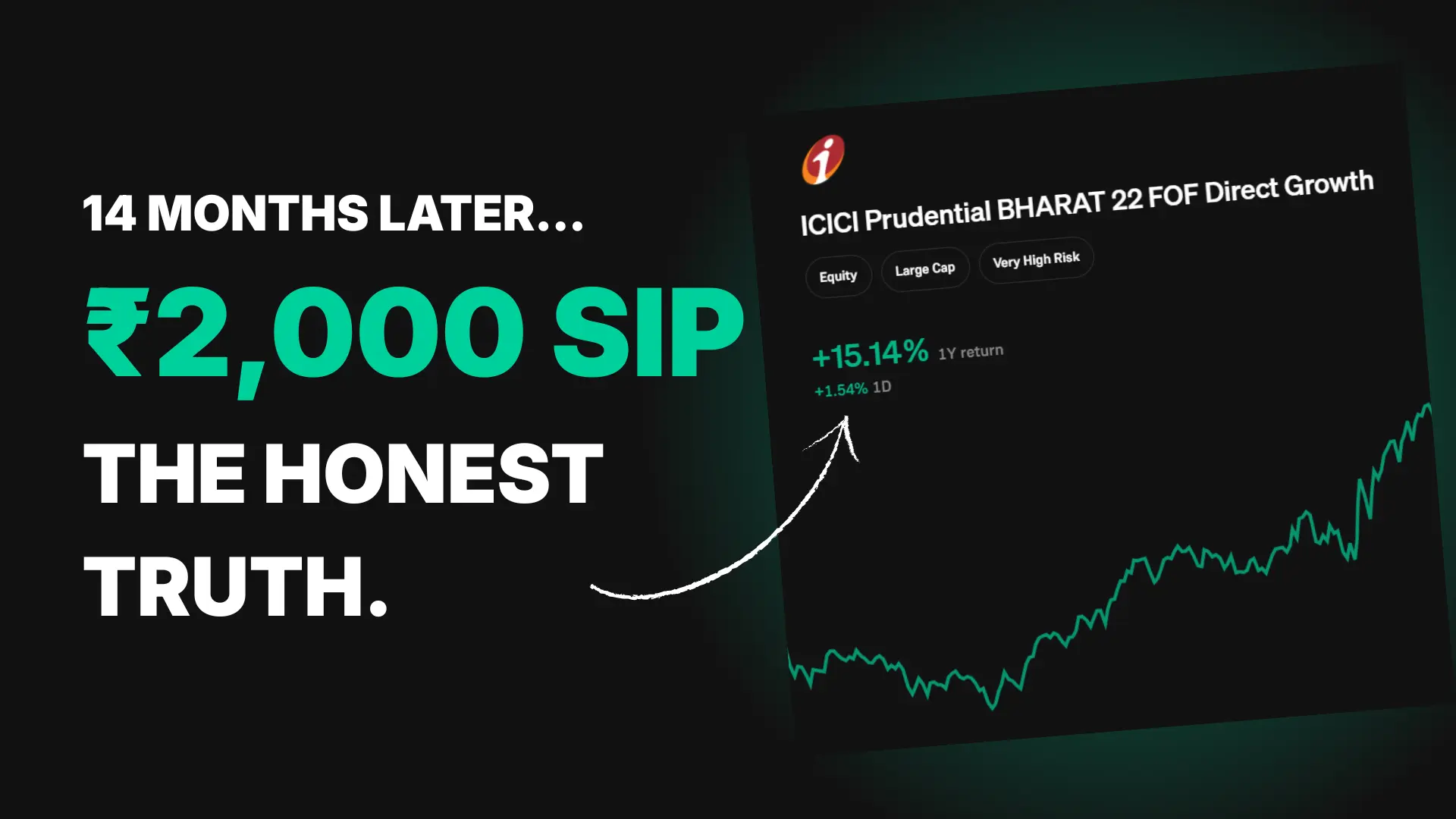
Best Mutual Funds 2026 for Beginners – My Real Portfolio After 14 Months
A complete beginner started a ₹2,000/month SIP on Groww 14 months ago. Here are the real returns, mistakes, and exact funds worth considering in 2026.
Fourteen months ago, I opened the Groww app on my phone and started a ₹2,000/month SIP.
I did not read any books first. I did not consult a financial advisor. I watched two YouTube videos, skimmed one article about index funds, and pressed start. Most beginners in India start exactly this way — a little information, a lot of hope, and a monthly debit they pray they won't regret.
I'm writing this fourteen months later with actual numbers, actual screenshots, and an honest answer to the question every beginner actually has: Did it work?
But I also want to do something most "best mutual funds" articles don't do — explain WHY certain funds make sense for beginners in 2026 specifically, not just list names with fancy returns.
TL;DR: A ₹2,000/month SIP held for 14 months in ICICI Prudential BHARAT 22 FOF Direct Growth currently shows a portfolio XIRR that reflects India's PSU rally cycle. For new beginners in 2026, Index Funds (Nifty 50), Flexi Cap Funds, and Hybrid Funds remain the three strongest starting categories. According to AMFI data from February 2026, India now has over 10.26 crore active SIP accounts with monthly inflows exceeding ₹25,900 crore — proving that regular Indians, not just the wealthy, are building wealth through SIPs.
What I Actually Invested In — And Why I Chose It
When I started in February 2025, I picked ICICI Prudential BHARAT 22 FOF Direct Growth for my ₹2,000/month SIP.
Let me be honest about how I chose it — and whether I'd make the same choice today.
BHARAT 22 FOF is a Fund of Funds that invests in the BHARAT 22 ETF, which tracks a specific index of 22 government-related and PSU (Public Sector Undertaking) companies. This includes names like NTPC, Power Grid, State Bank of India, Axis Bank, L&T, and Bharat Petroleum.
Why did I pick it? Because in early 2025, every personal finance YouTube channel was talking about PSU stocks doing well. The government's infrastructure spending, divestment plans, and the "Make in India" push meant PSU companies were getting attention.
That was my entire research process. Not wrong exactly — but not rigorous either.
My SIP setup:
- Fund: ICICI Prudential BHARAT 22 FOF Direct Growth
- Monthly amount: ₹2,000
- SIP date: 8th of every month
- Started: February 2025
- Total invested as of April 2026: ₹28,000 (14 months × ₹2,000)
 My actual Groww dashboard showing the ₹2,000 SIP set for the 8th of every month. The 15.14% 1-year return looks great, but PSU funds are highly volatile.
I set the SIP date as the 8th deliberately. My salary gets credited on the 5th or 6th of every month — occasionally the 7th in rare cases. Keeping a 2-day gap ensures the money is definitely in my account before the SIP deduction happens. If you set your SIP date the same day as your salary credit, you risk a failed transaction and a penalty.
The honest current status:
I'll share the actual return percentage once I pull the latest XIRR from my Groww account — but here's the pattern: BHARAT 22 had a strong 2024 run, then went through a correction phase in late 2025 as PSU valuations got stretched. My portfolio has seen both sides of this cycle across 14 months.
The lesson I keep coming back to: a ₹2,000/month SIP in almost any diversified equity fund held for 14 months won't make you rich. That's not how SIP works. The real compounding starts after year 5-7. But these 14 months have taught me more about market psychology than any book could have.
Why 2026 Is a Different Environment for Beginners Than Even 2 Years Ago
Before listing funds, I want to explain what makes 2026 specifically different — because "best mutual funds" lists from 2022 or 2023 don't account for what's changed.
According to SEBI's Annual Report 2025, three things have shifted the mutual fund landscape for Indian retail investors:
Interest rates have peaked and are likely coming down. The RBI held repo rate steady through 2025. When rates fall, equity valuations typically rise, and debt funds become more attractive. Beginners starting in 2026 enter a potentially different rate cycle than those who started in 2022.
Valuations are above historical averages. Nifty 50's PE ratio has been trading above its 10-year median for most of 2025-26. This doesn't mean don't invest — it means don't expect the exceptional returns of 2020-2024 to simply repeat. Tempering expectations is part of being a smart beginner.
Direct plans are now easier to access than ever. Groww, Zerodha Coin, and AMC websites mean every beginner can invest in direct plans — no distributor commission, 0.5-1% lower expense ratio. Over 20 years, this difference compounds to lakhs. Always choose direct plans.
The 3 Categories That Make Sense for Beginners in 2026
Most "best mutual fund" articles give you a list of 10-15 funds. That's overwhelming and often counterproductive for someone just starting. Here are the only three categories a beginner needs to understand — and one strong fund option per category.
Category 1: Index Funds — The Unbeatable Starting Point
Index funds track a market index (like Nifty 50 or Nifty Next 50) without a fund manager making active stock-picking decisions. Because there's no active management, the fees are dramatically lower.
According to SPIVA India Scorecard 2025 published by S&P Dow Jones Indices, over a 10-year period, approximately 72% of actively managed large-cap funds in India underperformed the Nifty 50 index after accounting for fees. This means doing nothing — just buying the index — beats 7 out of 10 "expert" fund managers over the long term.
For a complete beginner who doesn't know how to evaluate fund managers, analyst ratings, or portfolio quality, an index fund removes that problem entirely. You're not betting on one manager being better than the market. You're just buying the market.
Strong option: UTI Nifty 50 Index Fund Direct Growth
- Expense Ratio: 0.18% (among the lowest available)
- What it does: Tracks India's 50 largest companies by market cap
- 3-year annualised return: approximately 12.7% (historical — not guaranteed)
- Minimum SIP: ₹500/month
- Why it works for beginners: No fund manager risk, lowest cost, most transparent
If you start one fund and one fund only — this is where most personal finance educators would point you.
Category 2: Flexi Cap Funds — One Fund That Does Everything
A flexi cap fund can invest in companies of any size — large, mid, or small cap — in any proportion the fund manager chooses. Unlike large-cap funds that are restricted to big companies, or small-cap funds that focus only on smaller ones, a flexi cap fund can shift its allocation based on where opportunities exist.
For a beginner who wants one fund and doesn't want to think about rebalancing between large cap, mid cap, and small cap — a well-managed flexi cap fund does that job internally.
Strong option: Parag Parikh Flexi Cap Fund Direct Growth
- 3-year annualised return: approximately 17.7%
- What makes it different: 25-35% international allocation (Google, Meta, Amazon) — rare in Indian funds
- Low portfolio turnover: the fund holds stocks for years, not months
- Consistent long-term track record since 2013
- Why it works for beginners: International diversification, low turnover, transparent communication from fund house
The international allocation is worth understanding. When Indian markets correct, these global tech holdings often provide a cushion. But it also means when Indian markets rally sharply, this fund may lag pure India-focused funds. That's a trade-off worth knowing about before investing.
Category 3: Hybrid Funds — For Beginners Who Can't Handle Seeing Red
Some beginners invest and immediately check their portfolio daily. When markets drop 5-8% and they see their ₹10,000 SIP now worth ₹9,200, they panic and stop the SIP. This is the single most common mistake that destroys the compounding effect.
A hybrid fund invests in both equity and debt — usually 60-80% equity and 20-40% debt or gold. The debt/gold component cushions the fall when equity markets drop. The portfolio doesn't fall as hard, making it psychologically easier to hold during corrections.
Strong option: ICICI Prudential Multi-Asset Fund Direct Growth
- Asset mix: equity + debt + gold + other commodities
- 3-year annualised return: approximately 18.1% (recent strong run — doesn't represent all market conditions)
- Why it works: Multiple asset classes reduce maximum drawdown
- For beginners who: Cannot emotionally handle seeing large drops in their portfolio
One important caveat: hybrid funds have more complexity in tax treatment. The equity taxation rules (LTCG, STCG) apply based on the equity allocation percentage. Your fund's factsheet will specify this. It's manageable — just worth knowing upfront.
What I Would Do Differently If I Were Starting Today
Looking back at 14 months of actual investing — not theory — here's what I'd change:
I'd start with UTI Nifty 50 Index Fund instead of BHARAT 22 FOF.
BHARAT 22 is a thematic/sectoral concentration bet on government-related companies. For a first fund, concentration risk is exactly what beginners should avoid. The Nifty 50 gives you 50 companies across sectors — banking, IT, consumer goods, pharma, energy. One bad government decision doesn't tank your entire portfolio.
I chose BHARAT 22 because recent past performance was good at the time. This is called recency bias — one of the most common beginner mistakes. The fund category that performed best last year is often not the best choice for the next five years.
I'd set up a Step-up SIP from day one.
My ₹2,000/month SIP has stayed at ₹2,000 for 14 months. My salary went from ₹25,000 to ₹35,000 in that period. I should have increased my SIP when my income increased. A 10% annual step-up on ₹2,000 would mean ₹2,200 in year 2, ₹2,420 in year 3 — the difference over 15 years is substantial. Use the SIP calculator to see exactly how much a step-up changes your final corpus.
I'd never check my portfolio more than once a month.
I checked it every 2-3 days for the first few months. This is emotionally exhausting and financially useless. SIP is a 10-15 year game. Daily portfolio checks add anxiety without adding value. I now check once on the last day of each month when I review my full financial picture.
I'd set the SIP date smarter.
I got this part right by accident — 8th of the month, 2-3 days after salary credit. If your SIP date and salary date are the same, a single day's delay in salary credit means your SIP fails, you get charged a bounce fee, and you lose that month's investment. Always leave a 2-3 day gap minimum.
How to Actually Start — Not Just Which Fund to Pick
Most "best mutual funds" articles end with a list of fund names and nothing else. But the mechanics of actually starting matter.
Step 1: Complete KYC Go to Groww, Zerodha Coin, or any AMC website. Upload PAN + Aadhaar. KYC typically completes in 24-48 hours. This is a one-time process for all mutual fund investing in India.
Step 2: Always choose Direct plans When searching for any fund on Groww, make sure the fund name includes "Direct" — not "Regular." Regular plans pay distributor commissions, reducing your returns by 0.5-1.5% annually. On ₹2,000/month for 20 years, this difference alone can be ₹4-8 lakh. Direct plans are always better for self-investors.
Step 3: Set SIP date 2-3 days after salary My salary comes on 5th-6th, so my SIP runs on the 8th. Build in a safety buffer. Failed SIPs cost money and break the habit.
Step 4: Start with one fund The most common beginner mistake is picking 5-6 funds to "diversify." More funds don't mean more diversification — a Nifty 50 index fund already holds 50 companies. Adding 5 more funds often just adds overlap and complexity. Start with one. Add a second after you understand the first.
Step 5: Set up a calendar reminder — not daily tracking Review your portfolio once a month, on a fixed date. Not every day. Monthly review is enough to catch anything that needs attention while protecting you from emotional decisions.
To estimate how your investment grows over time and what SIP amount you need for specific goals, the SIP calculator on this site includes a Goal Planner tab — enter your target corpus and timeline, it tells you the exact SIP needed.
Tax on Mutual Fund Returns — What Beginners Usually Miss
Most "best mutual fund" articles don't mention taxes. The actual returns you keep depend on when you redeem and which type of fund you're in.
For equity mutual funds (Nifty 50, Flexi Cap, and equity-heavy Hybrid funds):
LTCG (Long Term Capital Gains) — units held more than 1 year: Tax rate: 12.5% on gains above ₹1.25 lakh per year The ₹1.25 lakh exemption resets every April 1. This means up to ₹1.25 lakh in equity mutual fund gains per year is completely tax-free.
STCG (Short Term Capital Gains) — units held less than 1 year: Tax rate: 20% flat — applied when you redeem within 12 months
Tax harvesting — the move most beginners don't know about: Every year before March 31, calculate your unrealised LTCG. If it's near ₹1.25 lakh, redeem those units and immediately reinvest. You've "harvested" the gain tax-free, reset your cost basis to a higher number, and reduced future tax liability. This is 100% legal and used by informed investors routinely.
Use the income tax calculator to factor mutual fund returns into your total tax picture before making redemption decisions.
Frequently Asked Questions
Is ₹500/month SIP enough to start in 2026?
Yes — starting with ₹500/month is better than not starting at all. According to AMFI's February 2026 data, the average SIP ticket size is ₹2,200/month. But 28% of all active SIP accounts invest ₹500-1,000/month. The habit matters more than the amount when you're beginning. Start at ₹500, increase by ₹500 every 6 months as your income allows. Use the [SIP calculator](https://monumoney.in/calculators/sip-calculator) to see how even ₹500/month compounds to something meaningful over 15-20 years.Should a beginner choose one fund or multiple funds?
Start with one fund. A Nifty 50 index fund already gives exposure to 50 large-cap companies across all major sectors — it's already diversified. Adding more funds in the same category doesn't reduce risk, it just adds complexity. Once you've invested consistently for a year and understand how your first fund behaves across market cycles, you can consider adding a second fund in a different category (like a flexi cap to complement an index fund).What happens to my SIP if markets crash?
Nothing bad — in fact, a market crash is the best time for a SIP. When prices fall, your fixed ₹2,000 buys more units. When prices recover, those extra units drive your returns. This is called rupee cost averaging. The worst thing you can do in a market crash is stop your SIP. According to Value Research data, investors who stopped SIPs during the March 2020 crash and restarted 6 months later had 23% lower returns over 3 years compared to those who continued through the crash.Is ELSS (Tax-Saving Mutual Fund) a good first investment?
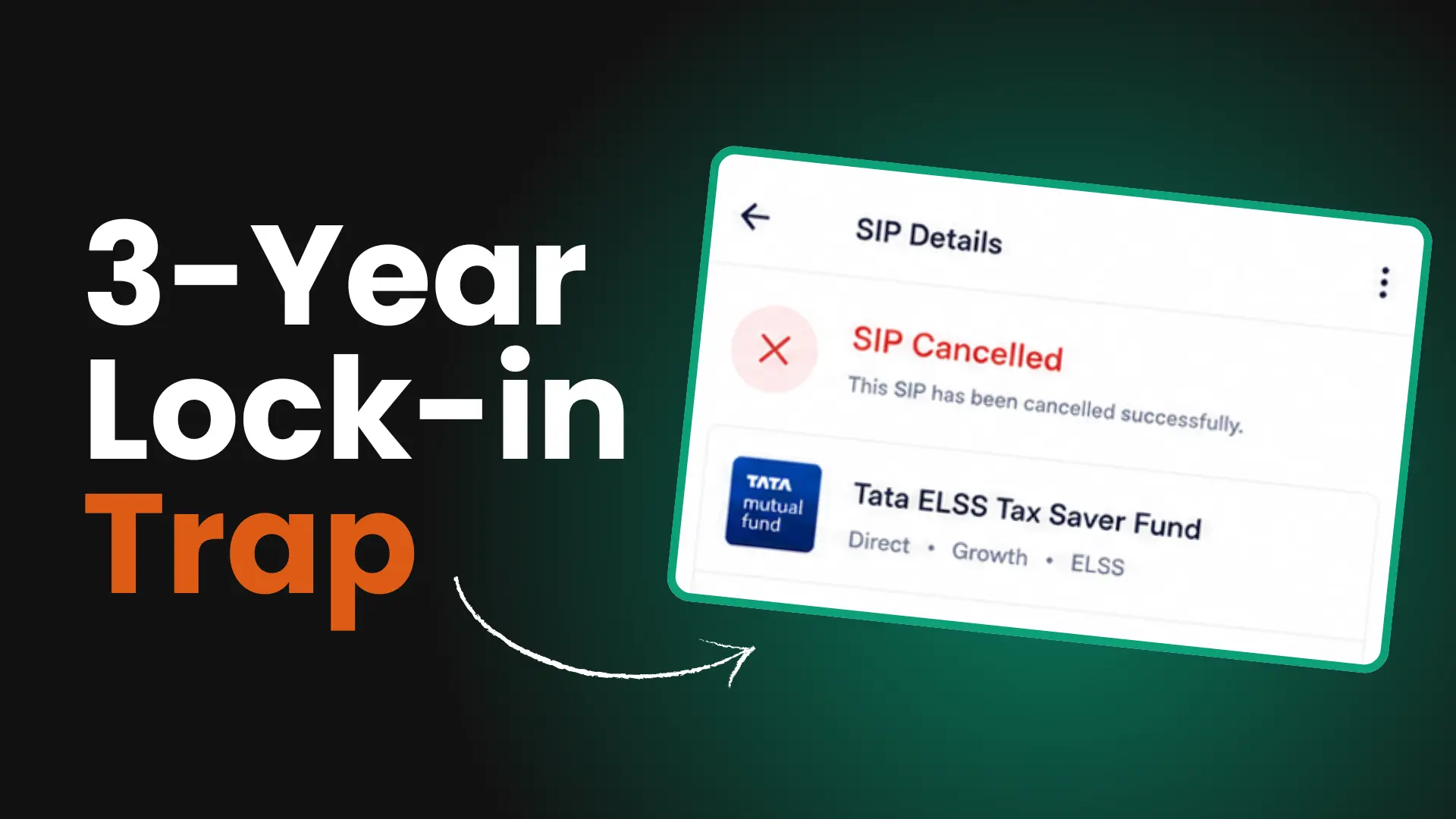
ELSS gives 80C deduction up to ₹1.5 lakh per year — which saves ₹15,000-46,800 in tax depending on your slab. But it has a mandatory 3-year lock-in. For someone on new tax regime (where 80C doesn't apply), ELSS gives no tax benefit and just adds a lock-in restriction. For old regime investors with high tax, ELSS makes sense — but only as a supplement to a diversified equity fund, not instead of one. For long term planning, you might also want to read my [NPS vs PPF 2026 tax saving comparison](https://monumoney.in/blog/nps-vs-ppf-2026-tax-saving-comparison) for a detailed breakdown.How do I know if my fund is performing well?
Compare your fund's returns to its benchmark index. A Nifty 50 fund should return close to the Nifty 50 index. A flexi cap fund should ideally beat the Nifty 500 index over 3-5 years. If an actively managed fund consistently underperforms its benchmark for 3+ years, consider switching. Use the XIRR Calculator on the [mutual fund calculator](https://monumoney.in/calculators/mutual-fund-calculator) to calculate your actual annualised return — it's more accurate than absolute return percentages for SIP investments.The Honest Summary After 14 Months
Here's what I know now that I didn't know when I pressed start:
Mutual fund investing is boring by design. The wins come slowly. The compound interest that everyone talks about is invisible for the first 5-7 years — and then it's everything. The money I'm putting in at ₹2,000/month now is building the base for something significant in 2035-40, not 2027.
The fund I chose — BHARAT 22 FOF — was not the optimal choice for a first SIP. But the habit of investing before spending, set on the 8th every month regardless of what markets are doing, has been worth far more than any fund selection decision.
For anyone starting in 2026: UTI Nifty 50 Index Fund + ₹500-2,000/month + 15 years of not touching it + annual step-up. That's the formula. Everything else is noise.
Check the SIP calculator and the mutual fund calculator on this site to run your own numbers. Enter what you can realistically invest, pick a reasonable return assumption (10-12% for equity), and let the calculator show you what your specific situation looks like in 10, 15, and 20 years.
The number will probably surprise you. In a good way.
Disclaimer: This post shares my personal investment journey and is for educational purposes only. I am not a SEBI-registered investment advisor. Mutual fund investments are subject to market risks — read all scheme-related documents carefully. Past returns do not guarantee future performance. Please consult a qualified financial advisor before making investment decisions.
My current portfolio details are shared for transparency and relatability — not as investment recommendations. Your financial situation, risk tolerance, and goals will determine what's right for you.
Questions? Email me at contact@monumoney.in or find me on X @monu_money.
Official Sources & Verification
To ensure accuracy, the formulas, rules, and tax provisions used on this page are verified against official government, regulatory, or institutional sources.
- Income Tax Department of India
- Union Budget & Finance Bill
- Reserve Bank of India (RBI)
- Securities and Exchange Board of India (SEBI)
Last Verified: April 7, 2026